B2B - Enterprise - Fintech - 2023
Redesigning the client side of EY's data collection tool
A redesign of the client-facing side of EY's tax data collection tool. The platform worked well for tax professionals, but the respondent experience had accumulated significant usability debt. Grounded in continuous discovery and usability testing, the redesign made it easier for clients to navigate the questionnaire, track outstanding items, and hold conversations with their advisor — without reverting to email.

The problem
The client experience had been generating complaints for a while. Clients were struggling to navigate the questionnaire, taking longer than expected, and in some cases refusing to use the product entirely, asking to revert back to the legacy ways of working the platform was meant to replace. The product's problems weren't just a UX issue, they were creating real operational overhead.
Articulating what problems to solve
Before stepping into the redesign, I gave the team a clear picture of which parts of the experience were worth redesigning, and what was already working well enough. I ran interviews with advisors, did a heuristic evaluation of the core journeys, and looked at how competitors were handling similar problems. Advisors were particularly useful here: having regularly stepped in to help clients through the platform, they'd seen the friction up close.


Designing for a complex, multi-user environment
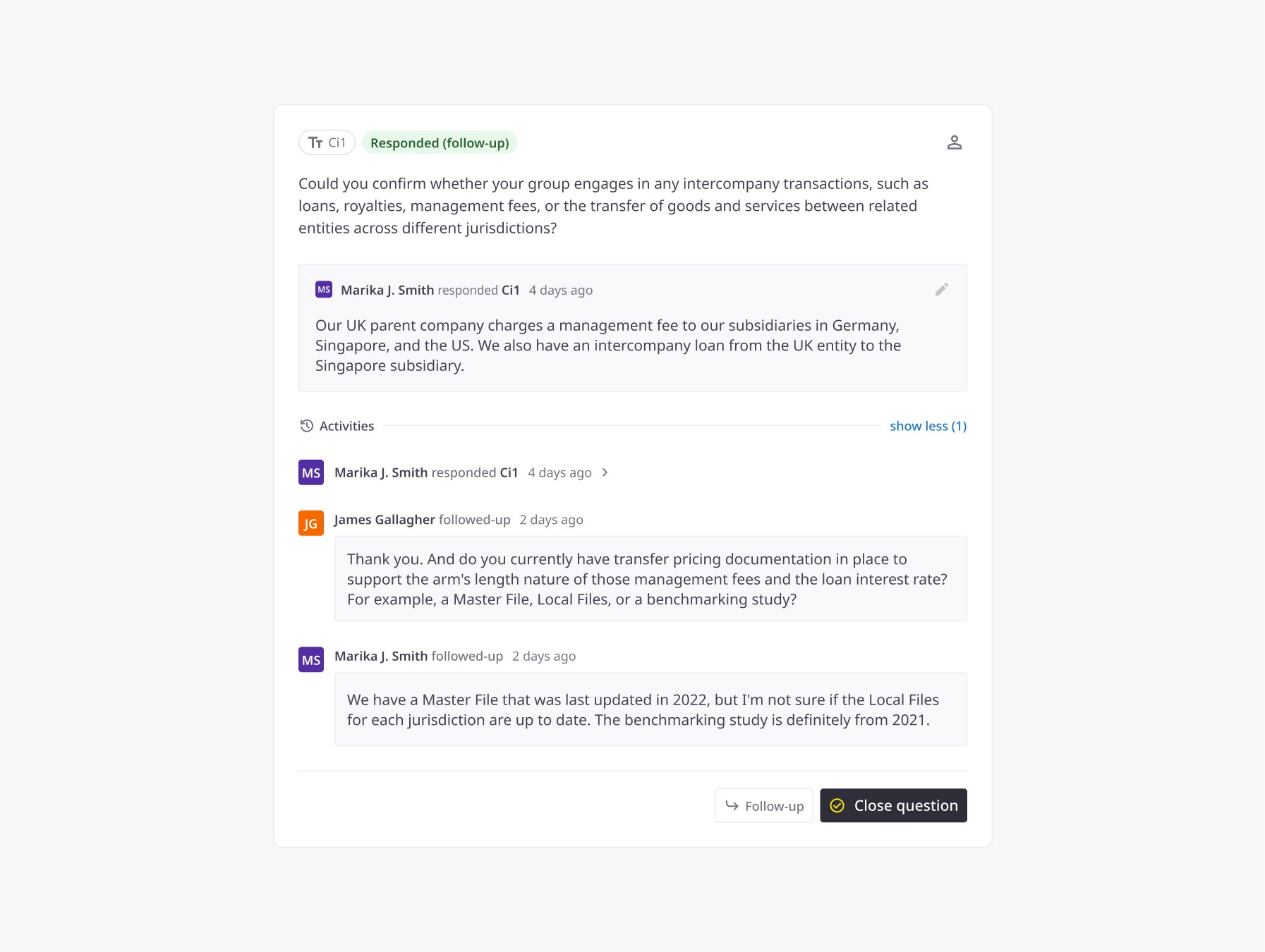
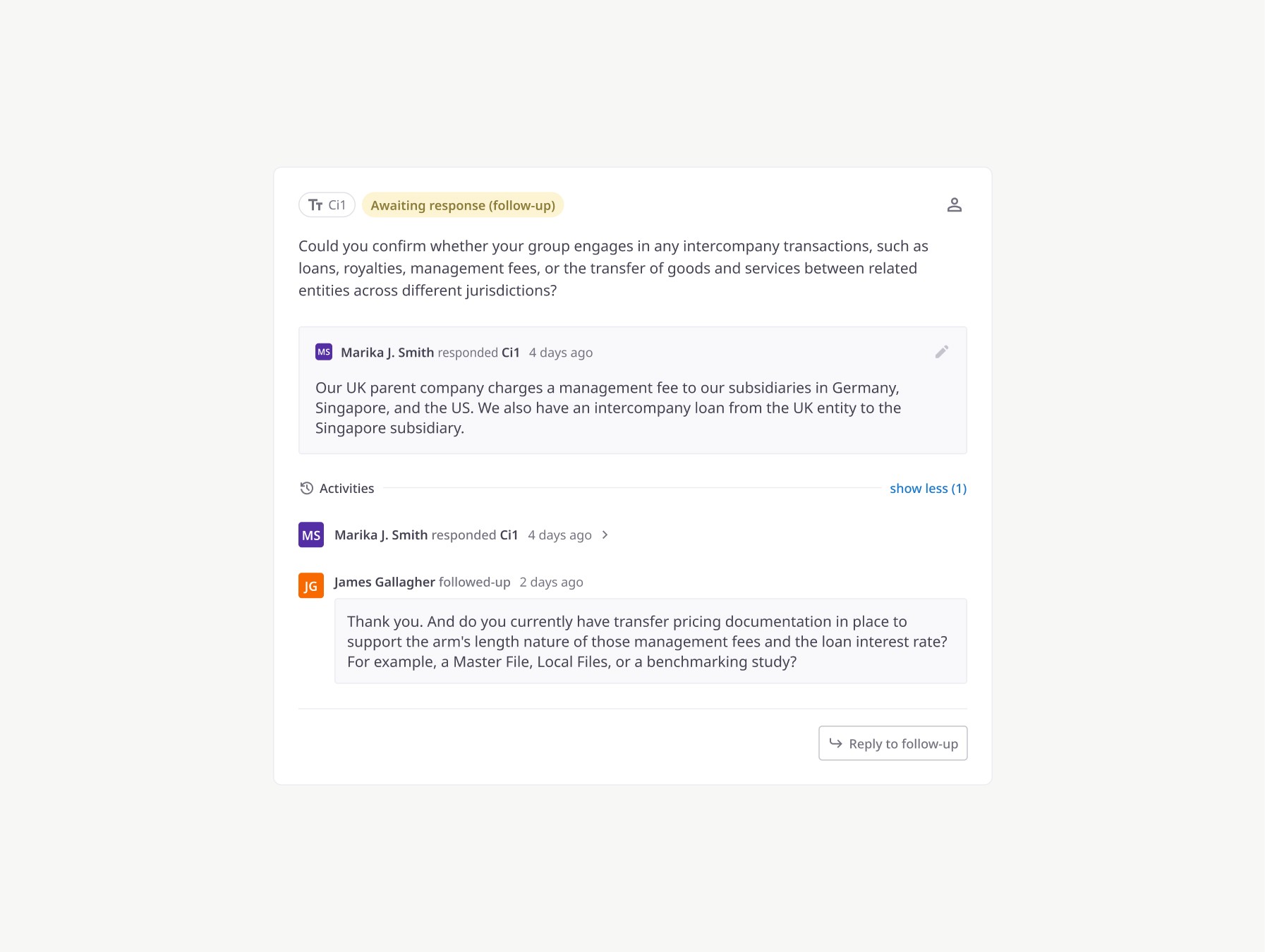
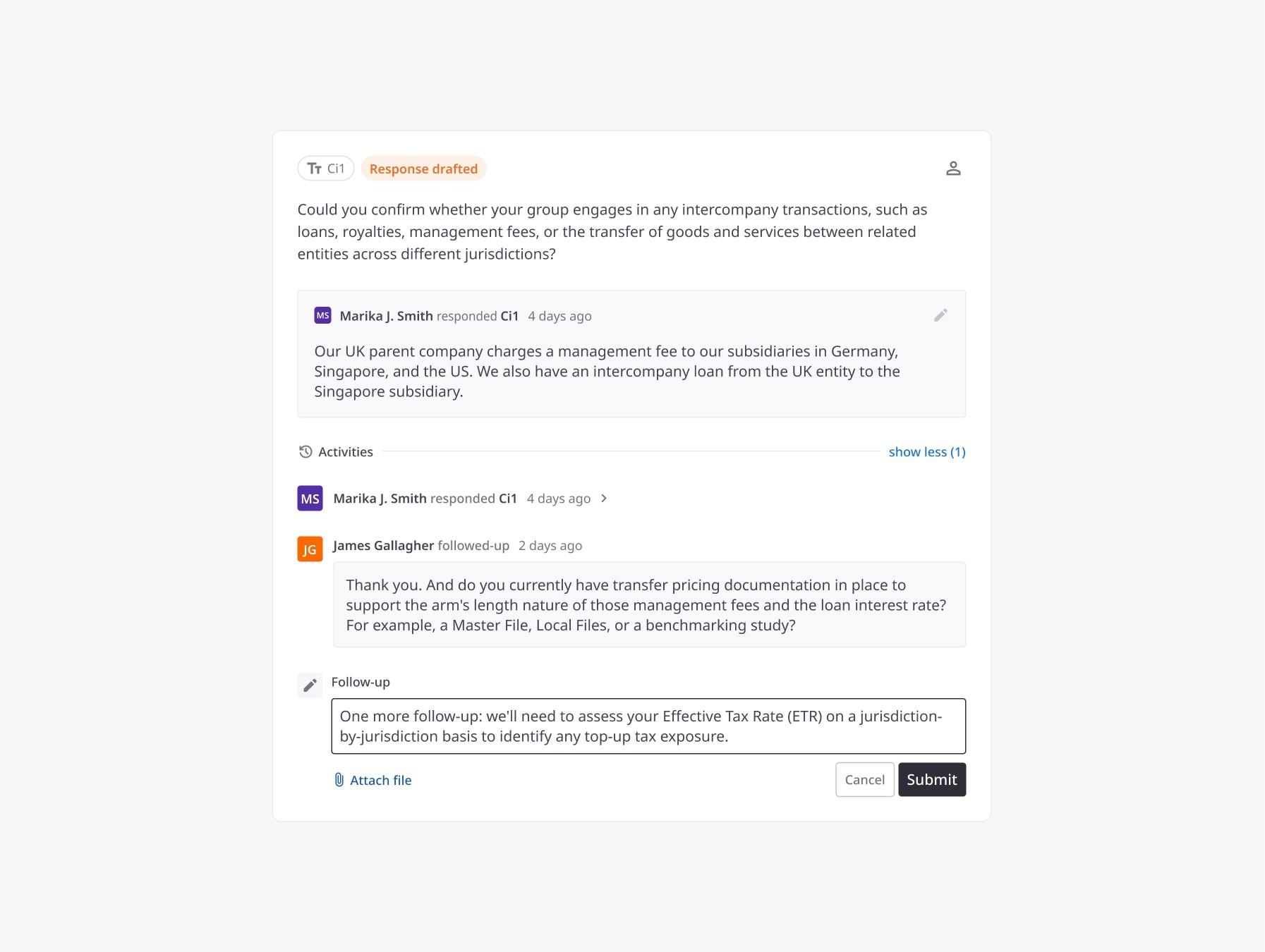
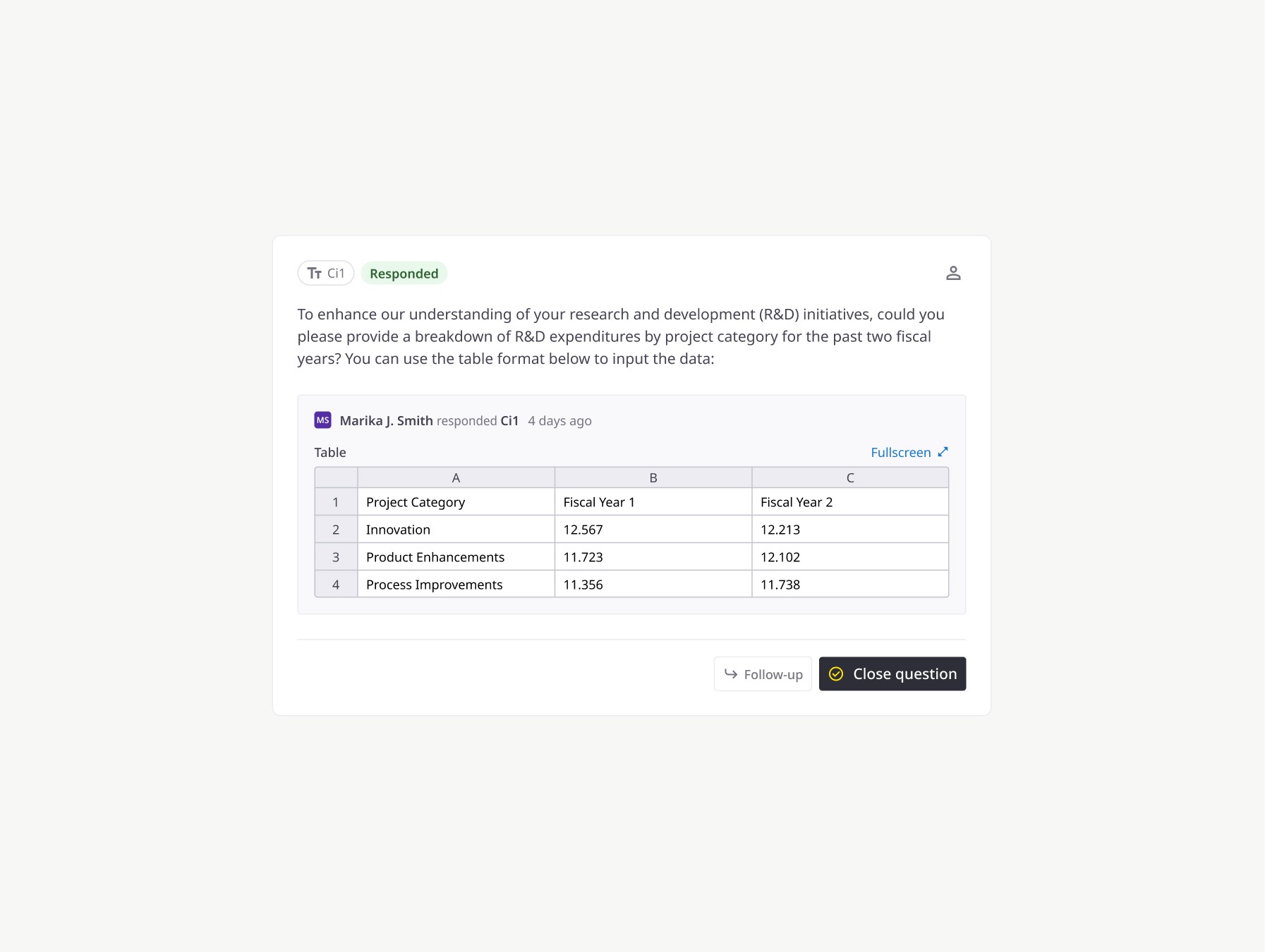
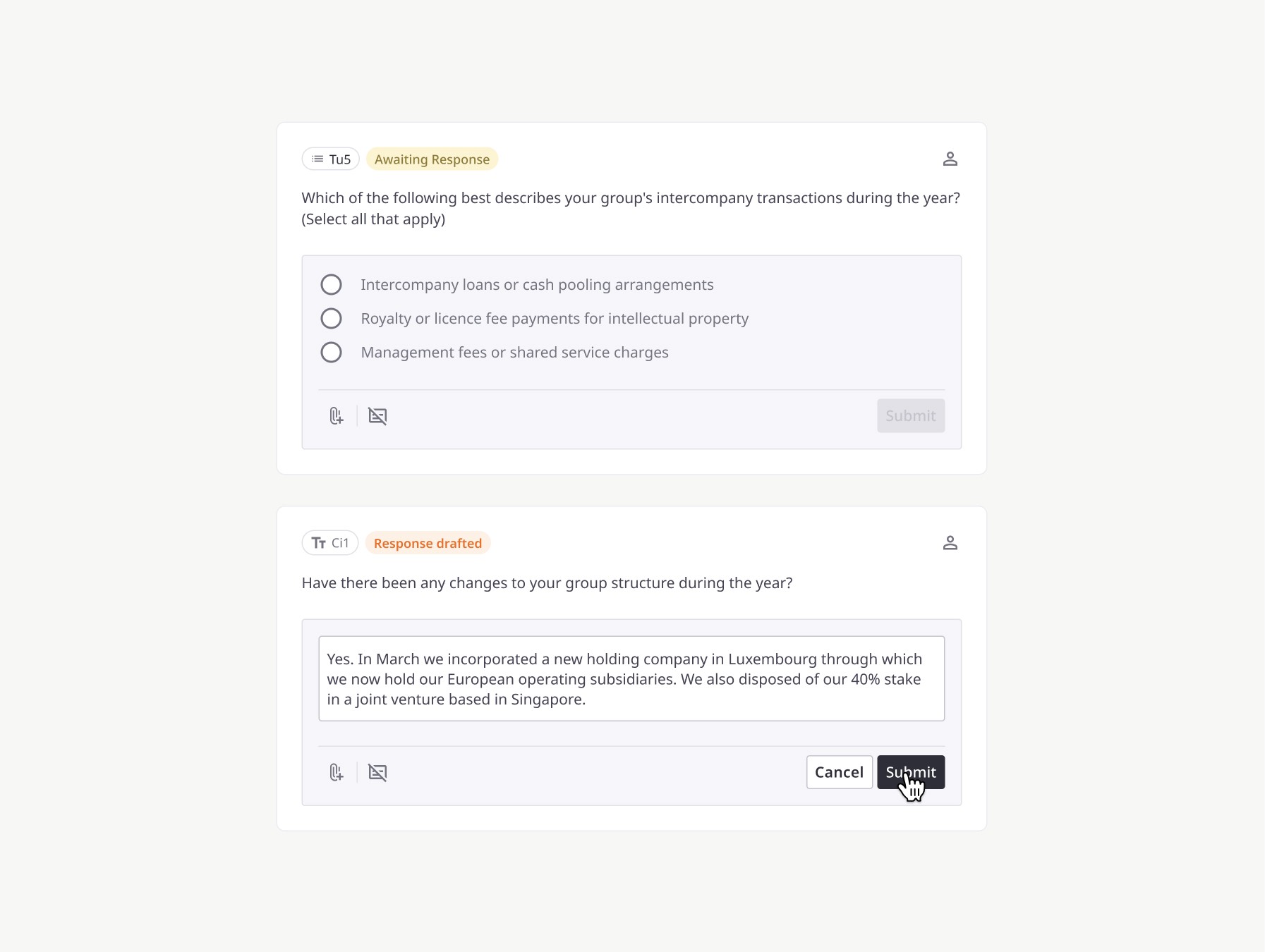
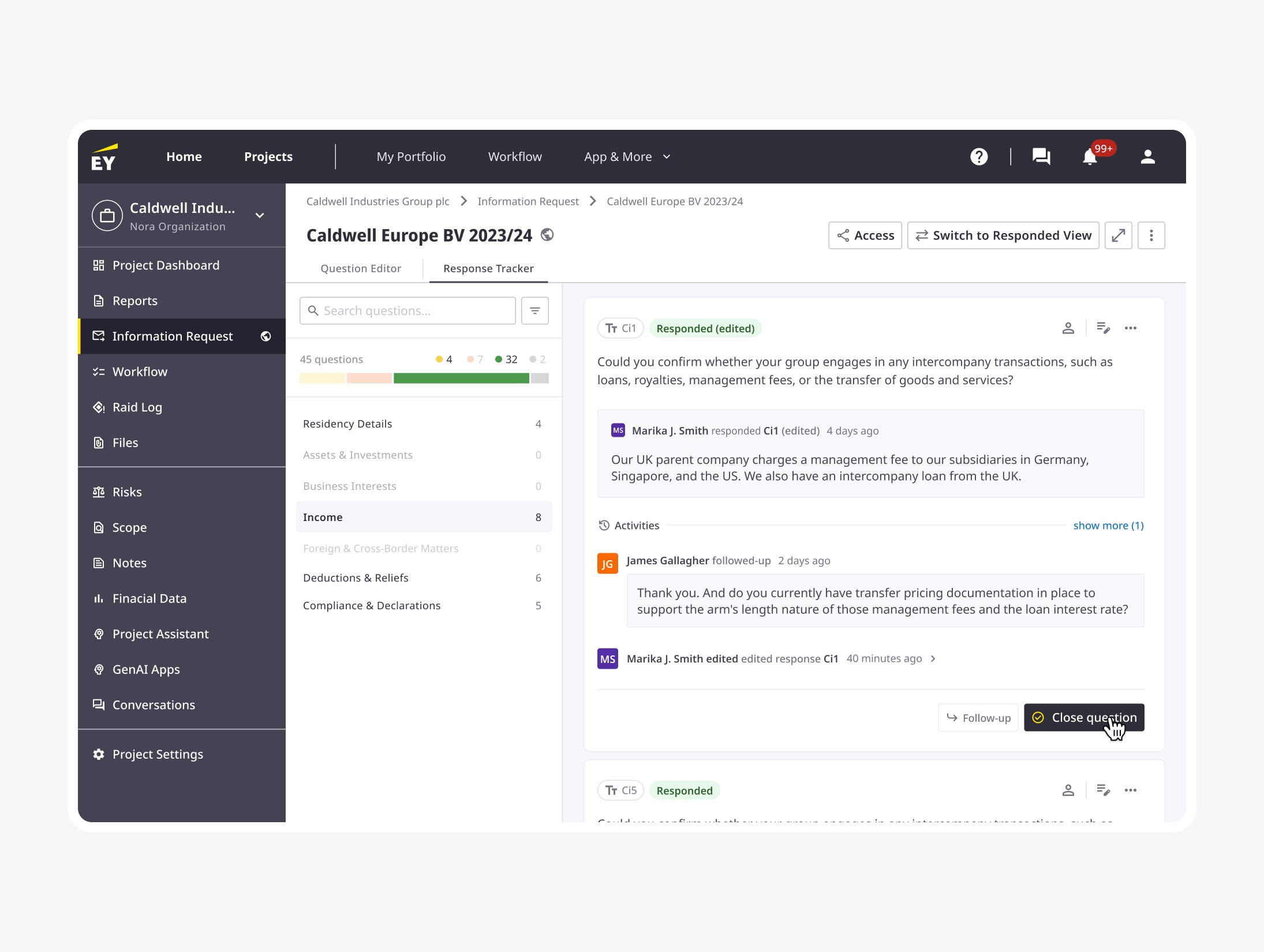
During the ideation of the client experience redesign, I took the opportunity to fundamentally shift the experience from something closer to a static form, to one built around ongoing conversation and back-and-forth collaboration. Taking inspiration from social platforms and forums, I redesigned the experience around threaded conversations.
Leading the usability testing to de-risk a significant investment
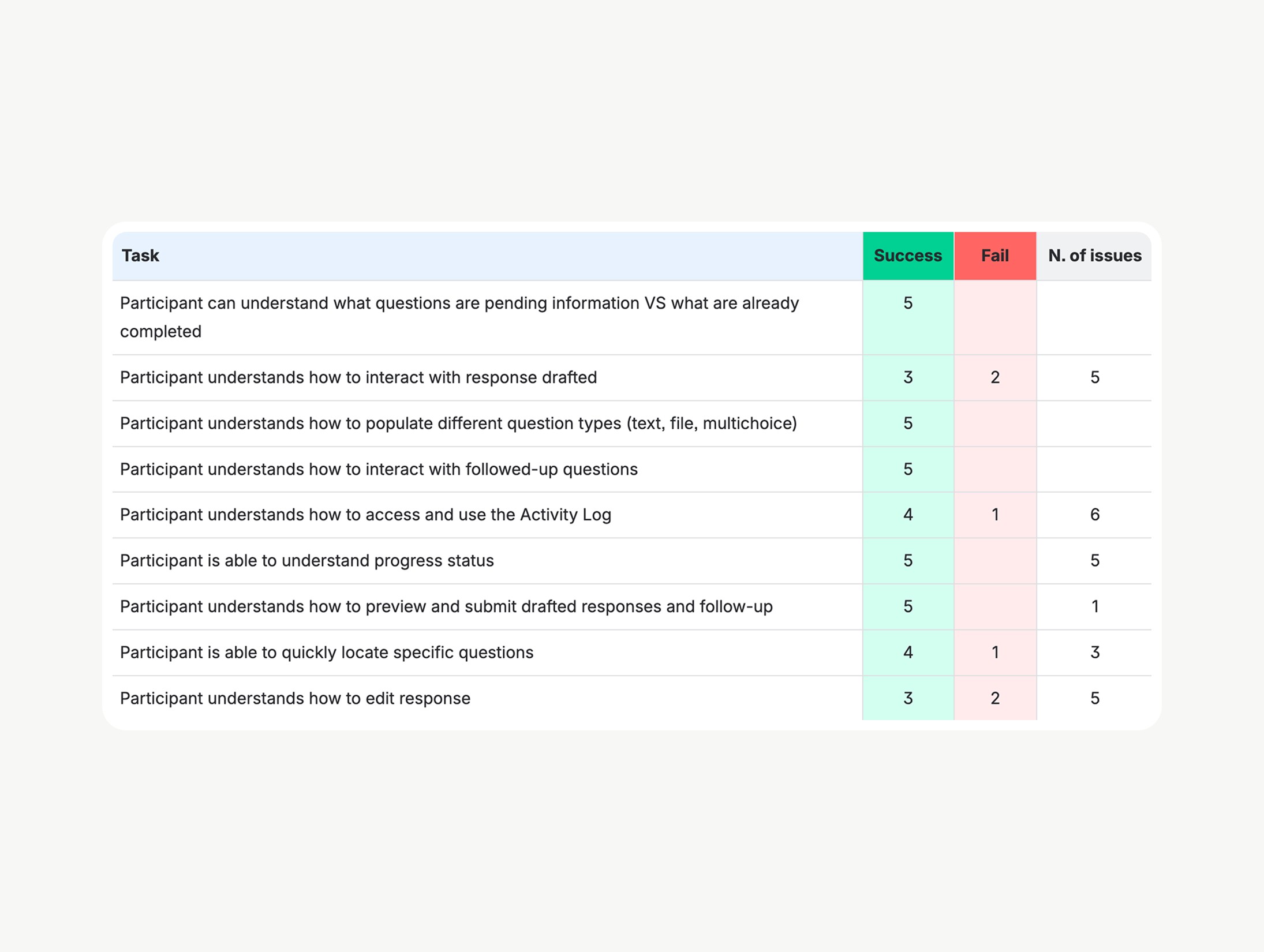
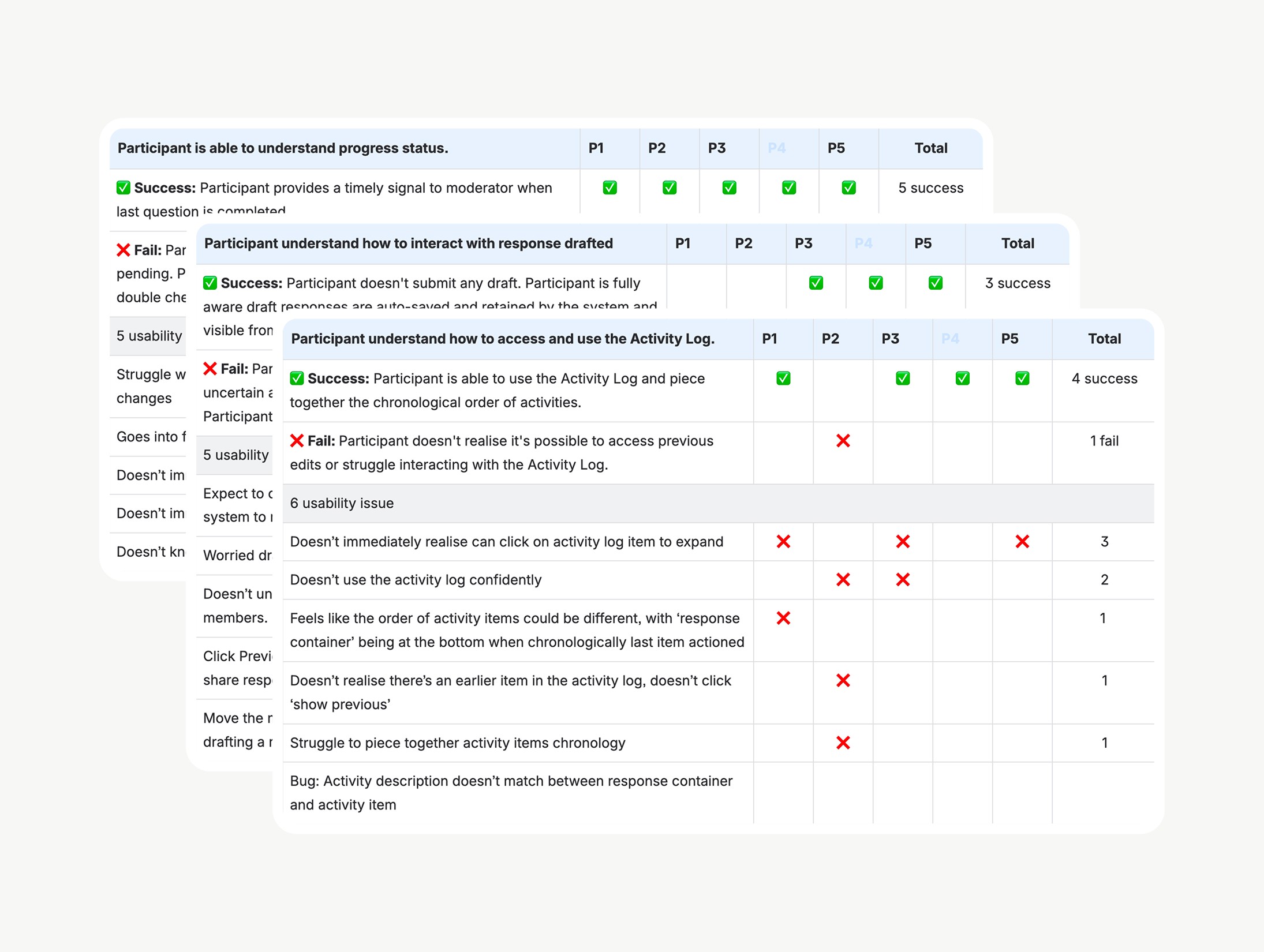
Because the redesign was substantial, the team needed confidence we were building the right thing before committing. I planned and led two rounds of usability testing, covering the full scope of the new experience, with tax professionals acting as client proxies. I directed the junior designer I was mentoring to support with recruiting and logistics, and coached her through moderation and analysis. Each round directly informed the next iteration and by the end, the team had everything they needed to proceed with conviction.

Bringing the stakeholders into the room
Rather than presenting findings back to stakeholders, I brought them into the room. The two people responsible for funding the product area joined one of the later testing sessions — watching real users navigate the redesigned experience intuitively, with none of the friction that had existed before, made the case better than any slide deck could. I did the same with the engineers from the scrum team. For many of them it was a rare opportunity to see users interact with the product first-hand, and to understand the why behind what they were building, not just the what.
Shipping the platform's highest-traffic product
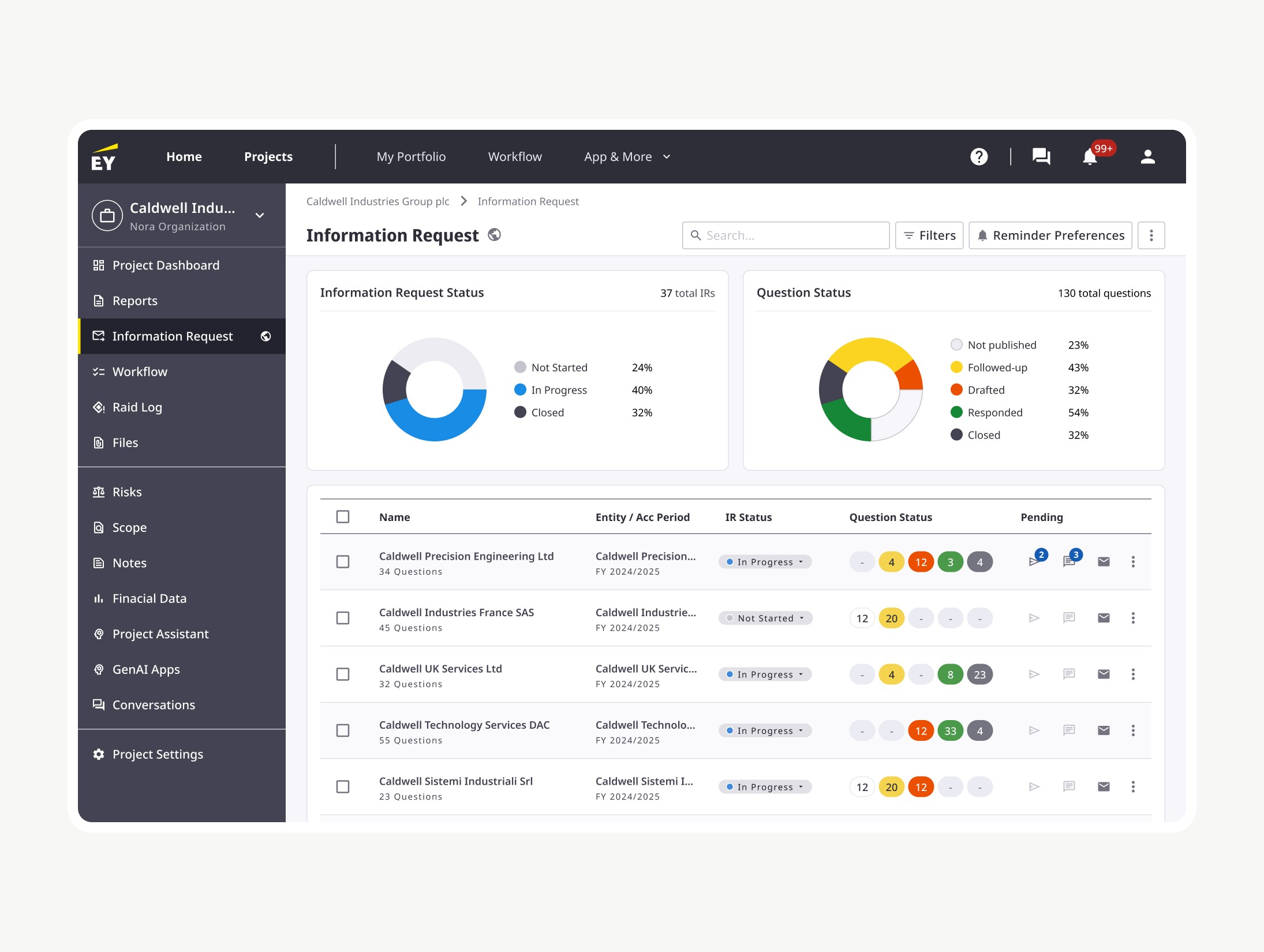
The client collection tool was — and still is — the majority of the platform's traffic and revenue. Redesigning it wasn't a low-stakes project. I saw it through from diagnosis to a fully shipped, live product, working closely with product and engineering throughout delivery. The redesign addressed the core usability debt that had been accumulating for years, and the qualitative signal that came back after launch reflected that.
Interested in the full case study?
Let's grab a chat.